About Starch

The company behind
actually working solutions.

Why we build, who we are, and how we work.

The story

Why we build,
and how we started.

The situation we walked into, and the decision it forced.

Starch began as a team of AI-native builders pointing agents at complicated problems. With a banking background on the founding team, finance was the first field we looked into, and the one we could not put down.

Inside the desks, the same picture at every firm: recurring work still run by hand, and horizontal tools that demanded months of customization only to stall one customization short of production. The last mile, the stretch that reaches a desk's own portals, formats and approvals, was always left to build by hand.

So we chose the other road: vertical solutions, one workflow on one desk, solved completely rather than promised broadly. That is how the company started, and it is still how every desk starts.

A bridge carrying a road out over the first stretch of the water, its last span out: a barrier stands at the broken edge and a girder hangs into the water, and the last mile is the longer stretch, walked on foot, prints down into the shallows and a long climb up the far bank to production WHAT THE TOOLS COVER WHERE IT FALLS APART THE LAST MILE, BY HAND PRODUCTION

The founding team

Who started Starch,
and what they bring.

One from the desks and one from the systems that have to satisfy them.

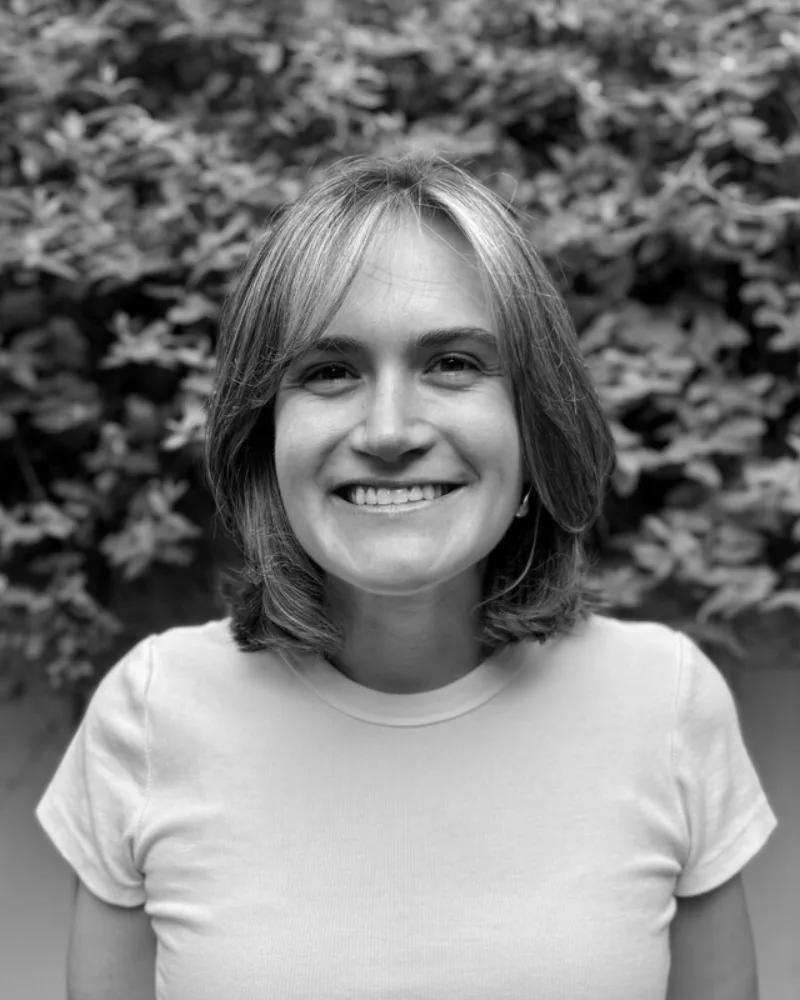
Frances Hughes

Frances HughesCo-founder and CEO

She has done a banking desk's work by hand, the recurring work Starch now automates. She was a Goldman Sachs banker before becoming an engineer, led engineering and product at startups, and built an AI company of her own. The desk and the systems, both learned from the inside.

More about Frances
Aniket Das

Aniket DasCo-founder and CTO

He has put technology and AI to work across medicine, manufacturing and mental health, and built companies of his own. He started his entrepreneurship journey by winning a major hackathon, and he now judges them. He also holds a Guinness World Record in speedcubing.

More about Aniket

The terms

How the work runs.

Six commitments a desk can hold us to, all of them already true wherever else on this site they appear.

Workflows, not seats

The unit is a desk workflow, not a seat. One is scoped, built, and run at a time.

Build, then run

A build first, scoped to the desks it runs on. Then the running of it, which stays ours.

We maintain it

Integration and upkeep are ours. Nobody on your side maintains it.

Your systems stay

Your systems of record stay yours. Starch writes into them and replaces none of them.

Single tenant

Your cloud or ours. Never pooled, never used to train a model.

Approval is yours

Once routed for approval, an artifact is read-only. Nothing moves without a named person.

The facts

What Starch does,
and for whom.

The rest of the site argues its case in drawings. These rows are the plain statements underneath.

Company
Starch
Workflows
RFP response, due diligence, deal management and coverage, each built for one desk and then operated by us, on one AI Workspace
Deployment
Single tenant, in the firm's own environment or a dedicated cloud. Never pooled, never used to train a model
Office
Brooklyn, New York
Comparisons
Six, side by side, each crediting what the other side does well

See it

Bring the desk's worst
recurring problem.

Thirty minutes, on work already running. We will show you what the finished version looks like.

Book a demo
Productivity over time: no AI, a generic AI platform, and StarchThree conceptual lines show productivity over time, with no numeric scale. Without AI, productivity grows slowly. A generic AI platform grows faster. Starch grows fastest, compounding as workflows learn the firm's precedent and desk standards.TIMEPRODUCTIVITYNo AIGeneric AI platformStarch